
Whole Home Systems
Whole Home
Filtration and softening where water enters the house.
Softening resin and carbon filtration on the main line, so every tap, shower and appliance gets the same treated water.
Best for: Most homes on city water that want the scale and chlorine dealt with.
System overview
What the Whole Home system actually does
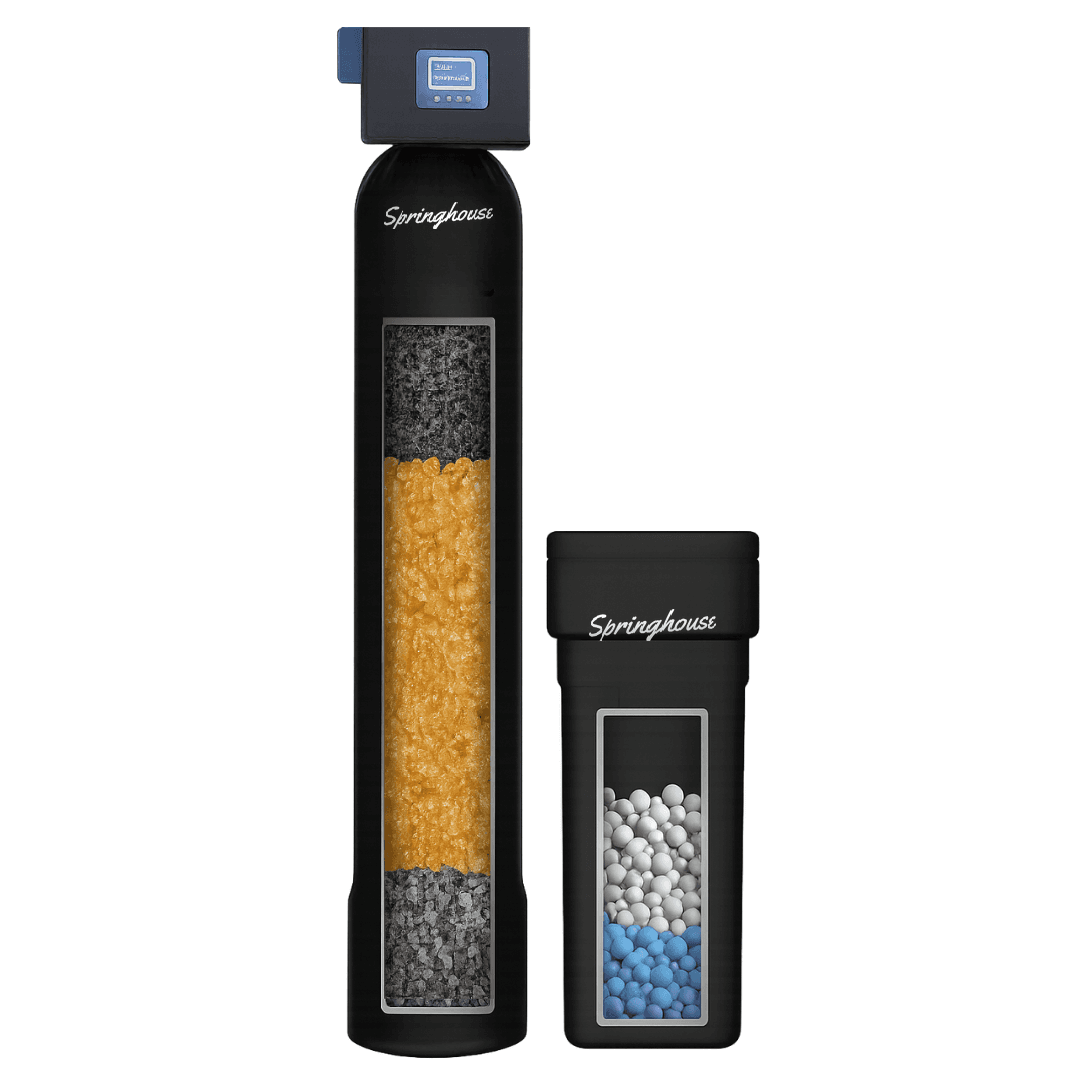
One tank, sitting where the water main enters the house, doing two jobs at once: softening resin to take the hardness out, and carbon to take the chlorine taste and smell out. Everything downstream of it - every tap, both showers, the dishwasher, the washing machine and the ice maker - gets treated water.
Chattanooga's published hardness is 4.4 grains per gallon (Tennessee American Water, Citico plant, 54-90 mg/L as CaCO3). That is moderately hard - not the 15 or 20 grains you would find in parts of the country, but well above the level where scale starts costing you a water heater.
It suits most homes on city water in Hamilton and Bradley counties: you notice scale on the glassware and fixtures, the water tastes of the treatment plant, and you would rather deal with both at the main line than hang filters off individual taps.
Component breakdown
What is in the tank, and what each part does
Softening is an ion exchange. Water passes through a bed of resin beads carrying sodium ions; calcium and magnesium - the two minerals that make water hard - swap places with that sodium and stay behind on the resin. Nothing is filtered out in the mechanical sense. The hardness is traded away. When the bed runs out of sodium to trade, the system rinses itself with brine, flushes the calcium to drain and starts again. That rinse is the regeneration cycle.
Carbon works the other way round. It does not trade anything - it adsorbs. Chlorine and the compounds that carry taste and smell stick to the enormous internal surface area of activated carbon as water passes through. One gram of it has the surface area of a tennis court, folded into pores. It is why carbon changes how water tastes while a softener does not.
The mixed bed
48,000 grains of capacity, with softening resin and carbon in the same vessel rather than two tanks in series. One tank, one valve, one footprint in the garage.
The control valve
The brain. It meters how much water has passed, decides when the resin is exhausted and runs the regeneration cycle, usually overnight so you never meet it.
The brine tank
Holds the salt. Its only job is to make the solution that recharges the resin during regeneration.
The bypass
Lets a plumber isolate the system without shutting off the house. Worth knowing it is there.
Performance specifications
Capacity, and what it means in practice
The arithmetic is simple and worth doing before you buy anything. At 4.4 grains per gallon and roughly 60 gallons per person per day, a four-person household puts about 1,056 grains through the system daily, or about 31,700 a month. A 48,000-grain unit therefore regenerates roughly every six and a half weeks on that load. A smaller household goes longer between cycles; a bigger one goes shorter. That interval is what drives your salt use, not the size of the tank.
Two numbers decide whether a system is sized right: the grain capacity and your household's daily draw. Everything else - the fittings, the finish, the badge on the front - is detail. Size is why we test at your tap before quoting rather than selling you a box off a shelf.
We publish the numbers our equipment supplier publishes and nothing beyond them. Where you see a flow rate or a rejection figure quoted to two decimal places on a water company's website, ask which test standard produced it. If the answer is not NSF/ANSI, it is marketing.
- Rated capacity
- 48,000 grains.
- Typical regeneration on Chattanooga water
- About every six and a half weeks for a four-person home. Calculated from the published 4.4 gpg at 60 gallons per person per day.
- Treats
- The whole house, from the point the main enters.
- Flow rate and pressure drop
- Set by the valve and the tank your system ships with. We give you the manufacturer's figure in writing with your quote rather than a number off a website.
Drinking water
What this does for drinking water, and what it does not
The carbon stage improves what comes out of every tap in the house, including the one you drink from. Chlorine taste and the smell that goes with it are the things people notice first, usually within a day.
What a whole-home system is not designed to do is reduce dissolved content - the minerals and solids that stay in solution all the way through. That is a different job and it needs a different technology, which is reverse osmosis at the sink. If drinking water is your main reason for calling, the Whole Home + Tankless RO is the honest recommendation rather than this one.
Before you buy
Worth understanding before you buy anything
Hard water does not make you ill. It is a plumbing and appliance problem, not a health one: scale insulates the heating element in your water heater so it burns more energy to do less, it furs up fixtures, and it stops soap rinsing properly so glassware films over and laundry comes out dull.
A softener will not fix a smell. If your water smells of rotten eggs that is sulfur, and no amount of ion exchange touches it - it has to be oxidized out first. Any company that sells you a softener for a smell has sold you the wrong thing.
Salt-free conditioners are a real category and they are not softeners. They change how scale forms rather than removing hardness, so your water stays hard by measurement. They suit people who cannot run a drain line or do not want to handle salt. They do not suit someone who wants the hardness number to come down.
What you get
Features
- 48,000-grain mixed bed
- Every tap, shower and appliance
- Written warranty terms with your quote
Also in whole home systems
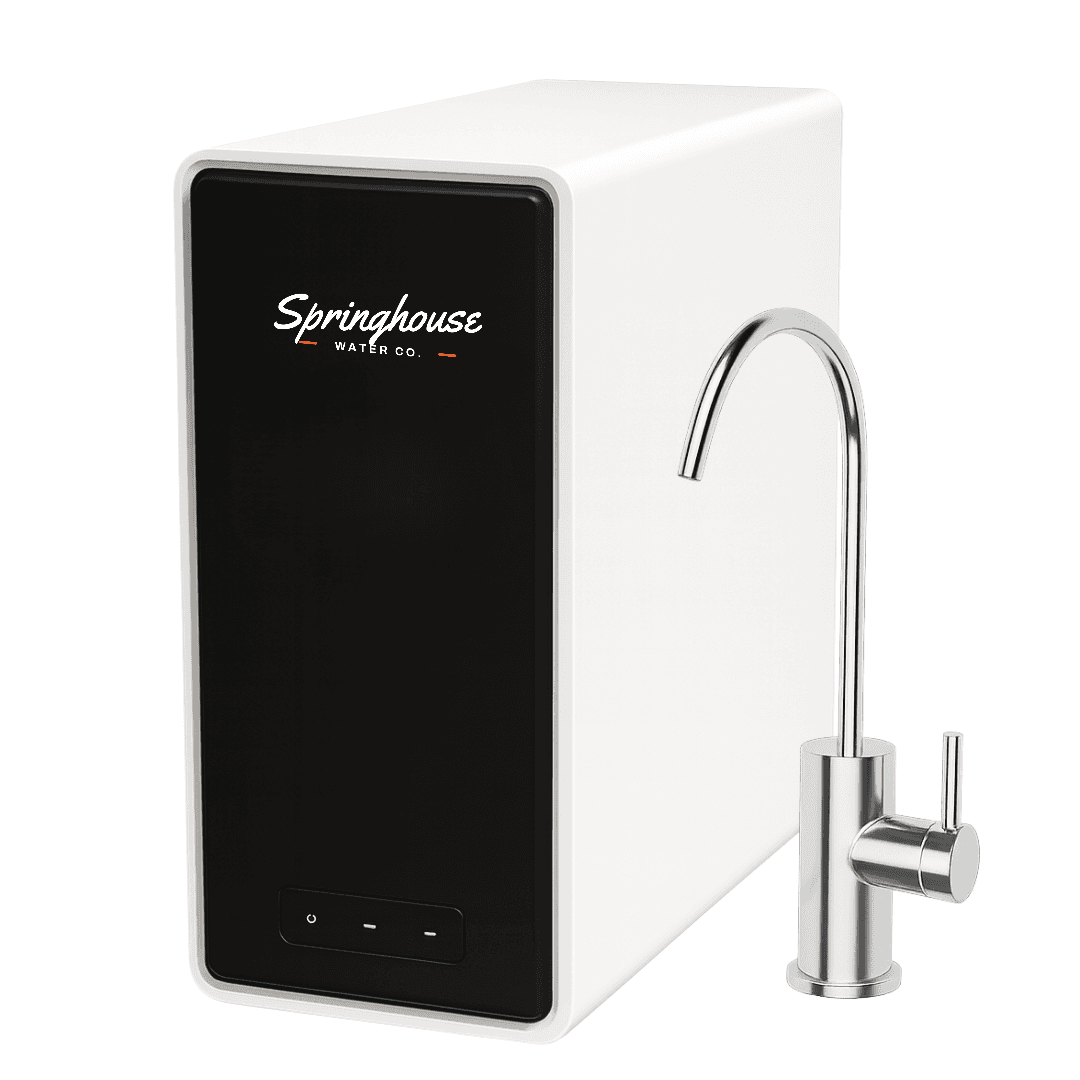
Whole Home + Tankless RO
Everything above, plus 7-stage RO drinking water at the kitchen sink.
View details →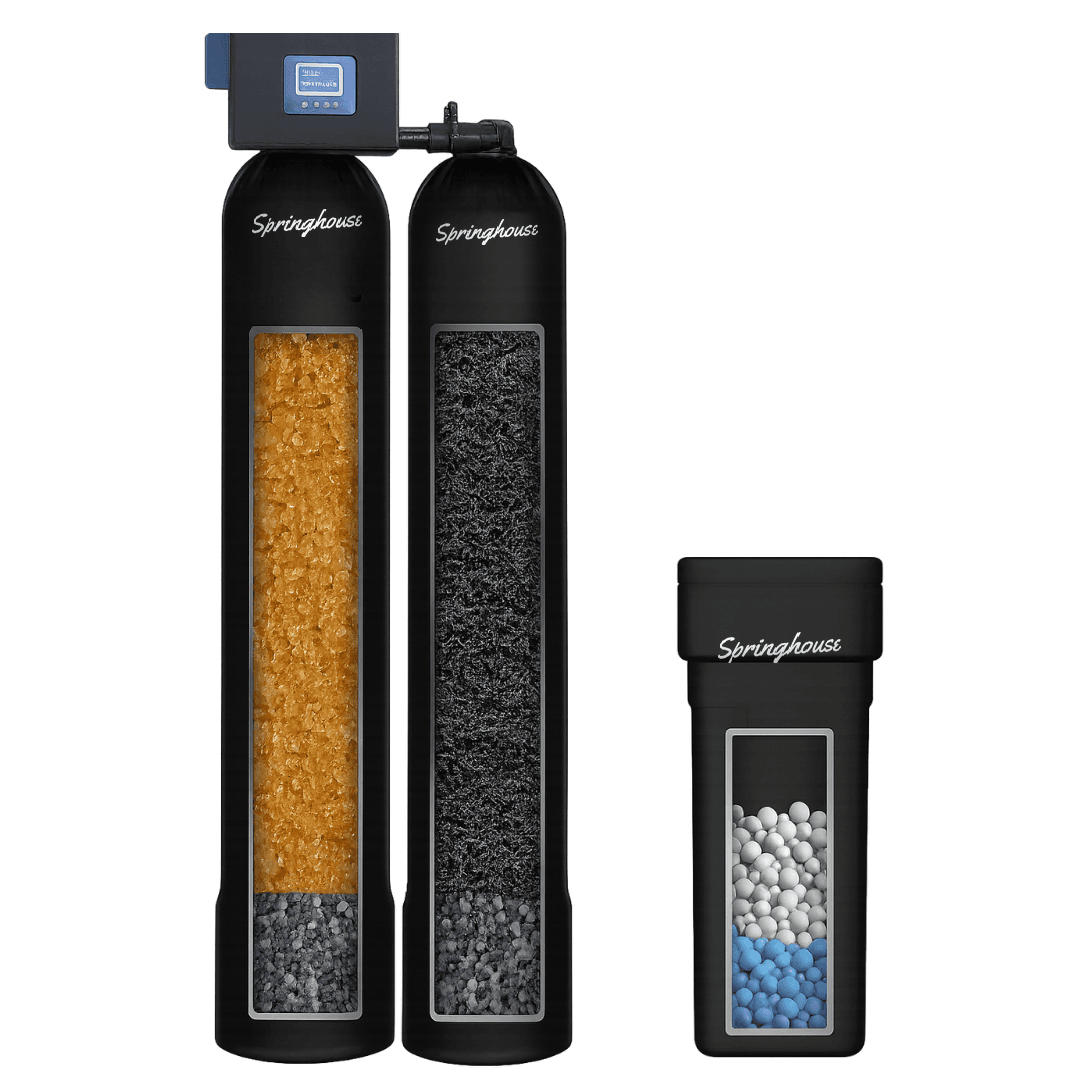
Dual Tank + Tankless RO
Separate catalytic carbon and softening tanks for bigger homes.
View details →Free water test
Find out what's actually in your water
We'll test your water at your kitchen sink, show you the result, and tell you what — if anything — you need. Free, and there's no system that fits every house.
- Free on-site water test
- Licensed plumber install
- Every price published